
Co-Regulation: Why Children Need Our Calm Before They Can Find Their Own
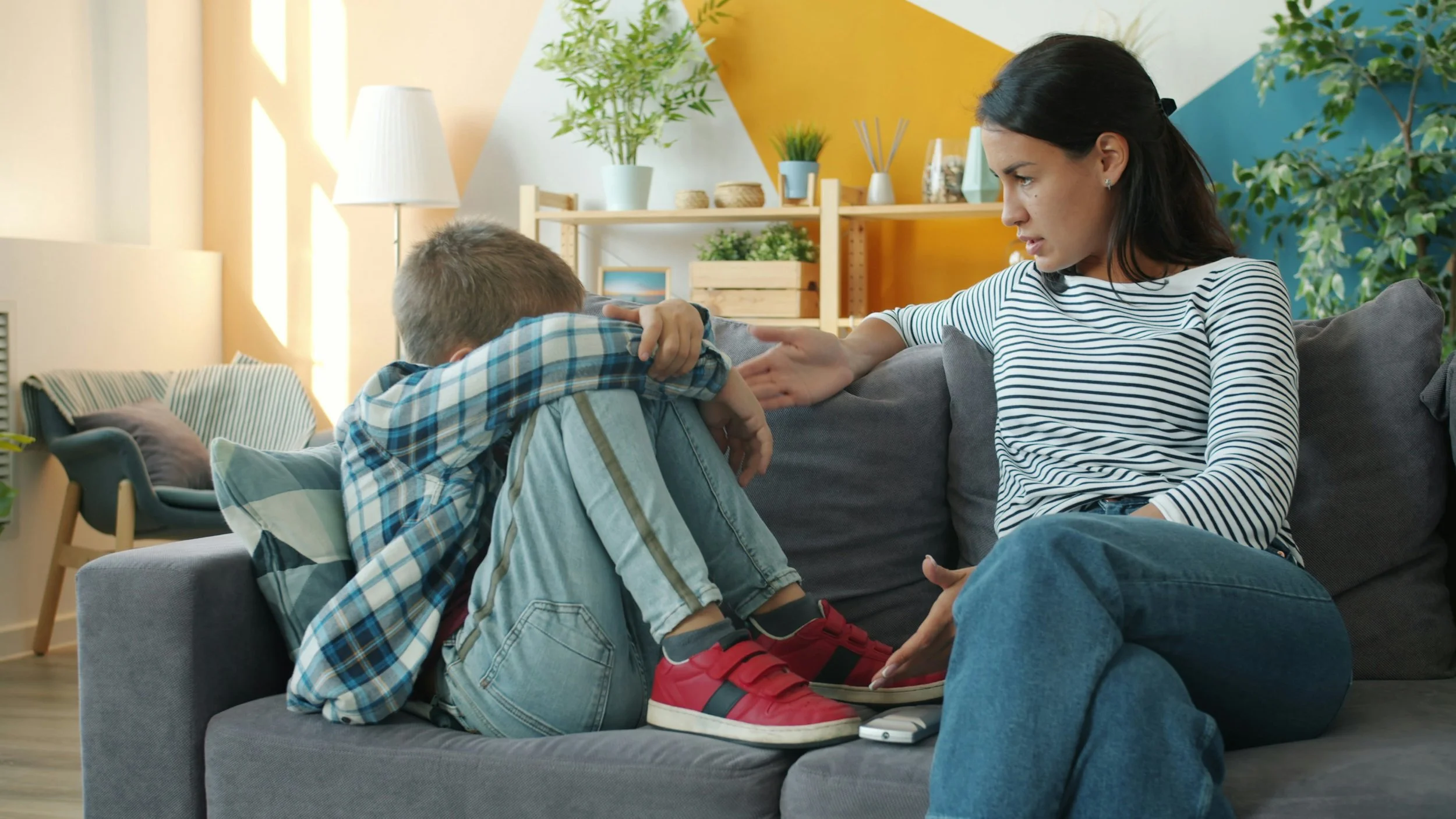
When a child is overwhelmed, we often find ourselves encouraging them to “calm down,” “take a breath,” or “use your strategies.”
These strategies can absolutely be helpful. But there is an important step that can sometimes get missed:
Before children can consistently regulate their emotions themselves, they need lots of experiences of being regulated alongside someone else.
This is called co-regulation.
From an Occupational Therapy perspective, regulation isn't about controlling emotions or behaviour. It isn’t about always being calm. It is about being able to reach and maintain a state that allows us to participate in what we need and want to do. Whether that's playing with friends, getting dressed, sitting in a classroom, managing a change in plans or recovering after something hasn't gone our way. And children don't learn how to do this alone.
What is co-regulation?
Co-regulation is the supportive process that occurs when a trusted adult helps a child manage their emotions, arousal and responses.
Research describes co-regulation as involving three important elements:
Warm, responsive relationships
Safe and supportive environments
Adults modelling, coaching and supporting regulation skills (Murray et al., 2019)
In other words, co-regulation isn't one particular strategy.
It might look like sitting quietly beside your child when they're overwhelmed. It might mean offering a cuddle, helping them move somewhere quieter, reducing your language, acknowledging how they're feeling, jumping together on the trampoline, or simply remaining nearby while the big feeling passes.
The support a child needs will vary depending on the child, the situation and what their nervous system needs at that moment.
Co-regulation comes before self-regulation
We sometimes talk about self-regulation as though children should naturally know how to manage big feelings independently. But self-regulation is a developmental skill.
Children gradually develop the ability to manage their thoughts, emotions and behaviour through maturation, experience and, importantly, supportive interactions with the adults around them. Co-regulation plays an important role in this development from infancy right through childhood, adolescence and even young adulthood (Murray et al., 2019; Frei & Herman-Stahl, 2021).
A young child who is overwhelmed because their tower has fallen down may not yet be able to think:
"I'm becoming frustrated. I can feel my muscles getting tight. I think I need to take a break and try again when I'm calmer."
Instead, we might see them scream, throw the blocks or run away.
An adult can step into that moment and provide the regulation skills that the child can't yet consistently access themselves:
"That was really frustrating. I'm here. Let's give your body a minute."
Over hundreds of everyday interactions, children experience what it feels like to move from dysregulation towards regulation with another person's support. Gradually, these experiences can contribute to the development of their own regulation skills.
Why does co-regulation matter?
Self-regulation supports children's participation across so many areas of everyday life, including learning, play, friendships, routines and coping with challenges.
A recent Australian Occupational Therapy review describes self-regulation as a foundational life skill, with early childhood being an important period in its development (Cossart et al., 2026). Co-regulation gives children opportunities to experience regulation with someone before being expected to achieve it independently. It can also change how we interpret children's behaviour.
Instead of asking:
"How do I get them to stop doing this?"
we can become curious about:
"What is their nervous system communicating right now, and what support might they need?"
This doesn't mean removing boundaries or allowing unsafe behaviour. We can still hold clear limits while providing connection and support.
For example:
"I won't let you hit me. I'm going to move back and give your body some space. I'm right here when you're ready."
The boundary remains, but the child isn't expected to navigate an overwhelming moment alone.
What does co-regulation actually look like at home?
There isn't one perfect co-regulation technique. Different children, and even the same child on different days, may need very different things.
Here are some ideas families can experiment with.
1. Start with your own regulation
One of the most powerful tools we bring into an interaction is our own nervous system. Before trying to change your child's state, notice yours.
Are you speaking quickly? Has your voice become louder? Are your shoulders tense? Are you trying to solve the situation immediately?
You don't need to be perfectly calm. Parents are human too. But slowing your breathing, lowering your voice and deliberately slowing your movements may help you approach the situation differently. Guidance on co-regulation specifically highlights the importance of caregivers starting with their own regulation (Pahigiannis, Rosanbalm & Murray, 2019).
2. Use fewer words when emotions are big
When a child is highly overwhelmed, a long explanation may simply add more information for their brain to process.
Instead of:
"We've talked about this before. You know that when your brother is using something you need to wait until he's finished and you can't just grab it from him."
try:
"You really wanted that toy. I'm here. We'll work it out."
There will be time for problem-solving and teaching later.
Regulate first. Reflect later.
3. Think about the environment
Co-regulation isn't only about what we say. Occupational Therapists also think about how the environment is influencing a child's capacity to regulate.
Could we:
dim the lights?
turn off background noise?
move away from a busy environment?
reduce the number of people talking?
give the child more physical space?
move somewhere familiar?
reduce the demands being placed on them temporarily?
Sometimes changing the environment is more effective than asking the child to change themselves.
4. Offer sensory support — but personalise it
Sensory experiences can be an important part of regulation.
Depending on your child's individual preferences, they might benefit from movement, pushing or pulling, jumping, rocking, squeezing something, wrapping up in a blanket, listening to music, sitting somewhere quiet or simply having fewer sensory demands.
The important part is that sensory strategies aren't one-size-fits-all.
What regulates one child may be irritating or overwhelming for another. An OT can help families understand a child's individual sensory preferences and identify strategies that fit naturally into everyday routines.
5. Connect before you correct
When behaviour needs addressing, we can still prioritise connection.
Imagine a child knocks over their sibling's LEGO creation after becoming frustrated. Our first instinct might be:
"Why did you do that? Go and apologise now."
But if the child is still overwhelmed, they may not yet have the capacity for reflection, perspective-taking or problem-solving.
First, help their nervous system settle:
"That was really hard. Let's move over here together for a minute."
Later, when they're regulated, we can return to what happened:
"Your brother was really upset when his LEGO was knocked over. What could we do now?"
Co-regulation doesn't mean avoiding accountability. It means supporting children to reach a state where they are actually able to learn from the experience.
6. Practise regulation when everyone is calm
The middle of a meltdown isn't always the best time to introduce a brand-new coping strategy. Instead, practice exploring regulation during everyday play and routines.
You might practise:
noticing body signals
identifying emotions
experimenting with movement
breathing activities
asking for space
asking an adult for help
identifying preferred sensory tools
noticing what helps their body feel calm
Then, when those strategies are needed, they're already familiar.
What if my child doesn't want me near them?
Co-regulation doesn't always mean cuddling, talking or being physically close.
Some children seek connection when they're overwhelmed. Others need less sensory input and more physical space. For a child who needs space, co-regulation might look like quietly saying:
"I'll give you some space. I'll be right over here when you need me."
We can remain emotionally available without demanding interaction.
Respecting a child's communication, including when they communicate that they need less interaction, is part of responsive co-regulation.
Co-regulation isn't about making every feeling disappear
This is particularly important.
The goal of regulation isn't to make children happy all the time. Children are allowed to be angry. They're allowed to be disappointed. They're allowed to feel worried, frustrated, embarrassed or sad. Our role isn't to remove those emotions. We aren’t aiming for constant calm.
Instead, co-regulation communicates:
"You can experience this feeling, and you don't have to navigate it alone."
Over time, children can develop a greater understanding that emotions change, difficult experiences can be managed, and support is available when they need it.
And sometimes, adults need co-regulation too
Co-regulation isn't something we magically grow out of. Adults often regulate through other people too.
We call a friend after a stressful day. We sit beside our partner when we're upset. Someone reassures us before a difficult appointment. A colleague listens while we debrief after something challenging. Humans are relational.
So expecting children to independently regulate every difficult emotion isn't particularly realistic especially when the adults around them still benefit from connection and support too.
How can an Occupational Therapist help?
When a child is regularly becoming overwhelmed, an Occupational Therapist can help families look beyond the behaviour and explore what may be contributing to it.
This might include considering the child's:
sensory processing preferences
awareness of internal body signals
emotional awareness
communication skills
executive functioning skills
environmental demands
routines and transitions
individual strengths and interests.
Australian OTs working with children with self-regulation needs describe the importance of considering both the child and their environment, collaborating with caregivers and teachers, and individualising support rather than focusing on the child in isolation (Philpott-Robinson et al., 2024).
Sometimes the most helpful intervention isn't teaching a child another "calming strategy." It may be helping the adults around them recognise the early signs of dysregulation, understand what their behaviour is communicating, adjust expectations or environments, and discover ways to regulate together.
Because before children can consistently find their own calm, they often need to experience what calm, safety and connection feel like alongside someone they trust.
References
Cossart, A., et al. (2026). Occupational therapists, self-regulation, and primary schools: A scoping review. Australian Occupational Therapy Journal.
Frei, A., & Herman-Stahl, M. (2021). Co-Regulation in Practice Series. OPRE Brief #2021-91. Office of Planning, Research and Evaluation, Administration for Children and Families, U.S. Department of Health and Human Services.
Murray, D. W., Rosanbalm, K., Christopoulos, C., & Hamoudi, A. (2019). Co-Regulation from Birth Through Young Adulthood: A Practice Brief. Office of Planning, Research and Evaluation, Administration for Children and Families, U.S. Department of Health and Human Services.
Pahigiannis, K., Rosanbalm, K., & Murray, D. W. (2019). Supporting the Development of Self-Regulation in Young Children: Tips for Practitioners Working with Infants in Childcare Settings. OPRE Brief #2019-27. Office of Planning, Research and Evaluation, Administration for Children and Families, U.S. Department of Health and Human Services.
Philpott-Robinson, K., et al. (2024). The experiences of occupational therapists supporting children with self-regulation needs: A qualitative descriptive study. Australian Occupational Therapy Journal.
