
Keeping Classroom Regulation Simple
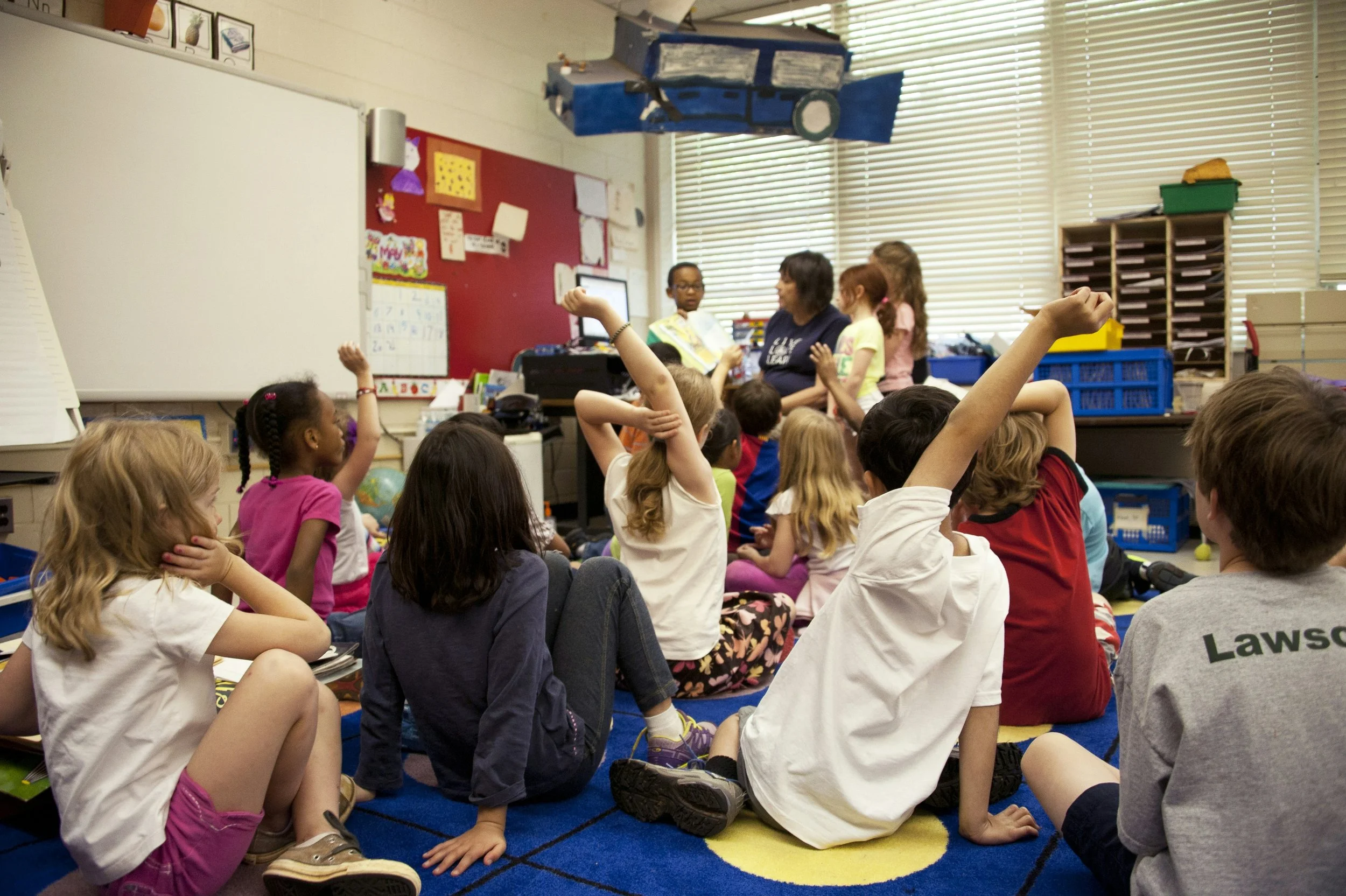
A regulated child is not necessarily a quiet, still or compliant child.
Regulation is about being in a state that helps us participate in what we need or want to do. In the classroom, this might mean having enough energy to join a group activity, feeling settled enough to listen to a story, or being able to stay engaged with a tricky task.
Importantly, regulation looks different for every child. Some children concentrate best while moving, some need something in their hands, others benefit from quiet, reduced visual input or regular opportunities to step away from a busy environment.
Rather than expecting all children to "sit still and focus", we can think about what their nervous system might need to participate successfully.
The good news? Supporting regulation doesn't always require specialised equipment or complicated sensory programs. Small changes to everyday classroom routines can make a big difference.
1. Build movement into the day
Movement can not be something children have to earn after completing their work. For many children, movement actually helps them get ready to learn.
Consider this analogy: Movement is the fuel in your car. Completing the classroom learning activity is our destination. Our children can’t drive to the destination with an empty fuel tank. We must fill their tank, before they can begin the journey
Teachers can naturally incorporate movement throughout the school day by asking a child to:
Deliver a message to another classroom
Hand out books or resources
Carry a tub of equipment
Do a quick stretch between activities
Teachers and school staff could also:
Include action songs or movement games into the classroom
Include actions when children are moving from one task to the next
Allow children to stand or move while working
Provide short movement breaks during longer tasks
For some children, regular movement opportunities can help them maintain the level of alertness which they need for learning.
2. Offer different ways to sit and work
Sitting upright at a desk isn't the only way to learn.
Depending on the activity and the individual child, consider allowing options such as:
Standing at a desk
Working on the floor or with a lap desk
Using a wobble cushion or stool
Kneeling at a low table
Sitting towards the edge or back of the group
Using egg chairs or “Howdahug” chairs on the mat
Changing position throughout a task
The goal isn't to find the "perfect" sitting position. It's to give children some flexibility to notice and respond to what their body needs.
3. Make regulation tools accessible
Fidgets, headphones and other regulation tools are most useful when they are seen as tools rather than rewards.
A classroom regulation space or toolkit might include:
Fidget tools
Noise-reducing headphones
Drawing materials
Books
Playdough or putty
Resistance bands
Weighted lap pads or plush toys
Visual breathing or movement prompts
Children may need support to explore which tools work for them, when they are useful and when they aren't. This can be completed as a classroom learning activity, a home task for a child and their family, or can be completed in consultation with the child’s Occupational Therapist.
Not every strategy will work for every child, and that's okay.
4. Consider the classroom environment
Classrooms are busy places. There can be talking, scraping chairs, bells, bright lights, colourful displays, people moving around, and lots of information competing for attention.
For some children, reducing unnecessary sensory input can make participation easier.
This could look like:
Providing access to a quieter workspace
Reducing visual clutter around work areas
Allowing headphones during independent work
Seating a child away from particularly busy spaces or walkways
Turning off unnecessary lights where possible
Providing additional personal space during group activities
Small environmental changes can sometimes reduce the amount of effort a child needs to simply manage the classroom environment, leaving more capacity available for learning.
5. Make the day predictable
Knowing what is happening next can be an enormous regulation support for many children.
Visual schedules, first–then boards, timers and simple verbal warnings can help children understand what is coming and prepare for transitions.
For example:
"First drawing, then we are packing up for mat time."
Some children may benefit from seeing this visually on a visual or whiteboard timer, as well as hearing transition warnings verbally.
Predictability doesn't mean the day can never change. Instead, it means helping children understand what to expect, including when something unexpected happens.
6. Think about energy matching a task, not necessarily "calming down"
Imagine sitting in a meeting and feeling your mind drift. You feel drowsy and inattentive. You need to stretch, sip your drink, or shuffle in your seat to alert yourself to stay engaged.
Regulation isn't always about becoming calmer. Sometimes children need more alerting input to participate.
A child who is tired, disengaged or finding it difficult to get started might benefit from jumping, stretching, having a cold drink, carrying something heavy or completing a quick movement activity.
At other times, such as before mat time, assembly or a quiet activity, a child may benefit from slower movement, reduced noise, deep pressure or a quieter space.
Instead of asking:
"How can we calm this child down?"
try asking:
"What level of energy does this activity require, and what might help this child get there?"
7. Support co-regulation
Children don't learn regulation skills entirely on their own.
Adults play an important role in helping children feel safe, understood and supported when their emotions or energy levels become difficult to manage.
This might mean:
Using a calm and predictable voice
Reducing language when a child is overwhelmed
Acknowledging the communication behind behaviours
Offering choices rather than making lots of demands
Staying nearby without requiring conversation
Helping the child access familiar regulation strategies
Over time, these experiences help children learn more about their own bodies, emotions and needs.
8. Teach regulation when children are regulated
The middle of a difficult moment usually isn't the best time to introduce a brand-new coping strategy.
Explore regulation tools and body signals during everyday classroom activities when children have the capacity to engage.
Teachers might talk about:
How our bodies feel when our energy is high or low
What helps us to focus
What different emotions feel like in our bodies
Why one person might find music helpful while another prefers quiet
Different strategies we can try when our bodies need something
This helps move regulation away from something we only talk about when a child is struggling.
Regulation support benefits everyone
Regulation strategies shouldn’t be reserved for children with a diagnosis or those who are visibly having difficulty.
A classroom that provides movement, flexibility, predictability, sensory options and opportunities for regulation will support participation for all learners.
The aim isn't to make every child look regulated in the same way. It's to create an environment where children can begin to understand what their bodies need, and have safe, practical ways to meet those needs.
How can Occupational Therapy help?
Occupational Therapists can work collaboratively with teachers, families and children to understand the factors affecting a child's participation at school.
Rather than simply prescribing a list of "sensory strategies", an OT can consider the individual child, the classroom environment, the demands of particular activities and the child's own preferences.
At Steps Together Children's Therapy, we work alongside schools to develop practical, neuro-affirming strategies that can be realistically embedded into the school day, supporting children to participate, learn and feel successful in their classroom.
References
Cossart et al. (2026). Occupational therapists, self-regulation, and primary schools: A scoping review. Australian Occupational Therapy Journal.
Lau (2025). Impact of Sensory Activity Schedules on School Performance of Students With Sensory Processing Differences: A Systematic Review. American Journal of Occupational Therapy.
Reyes-Amigo et al. (2025). Effectiveness of school-based active breaks on classroom behavior, executive functions and physical fitness in children and adolescents: A systematic review. Frontiers in Public Health, 13, 1469998.
