
Balancing the evidence with fun to make therapy effective.
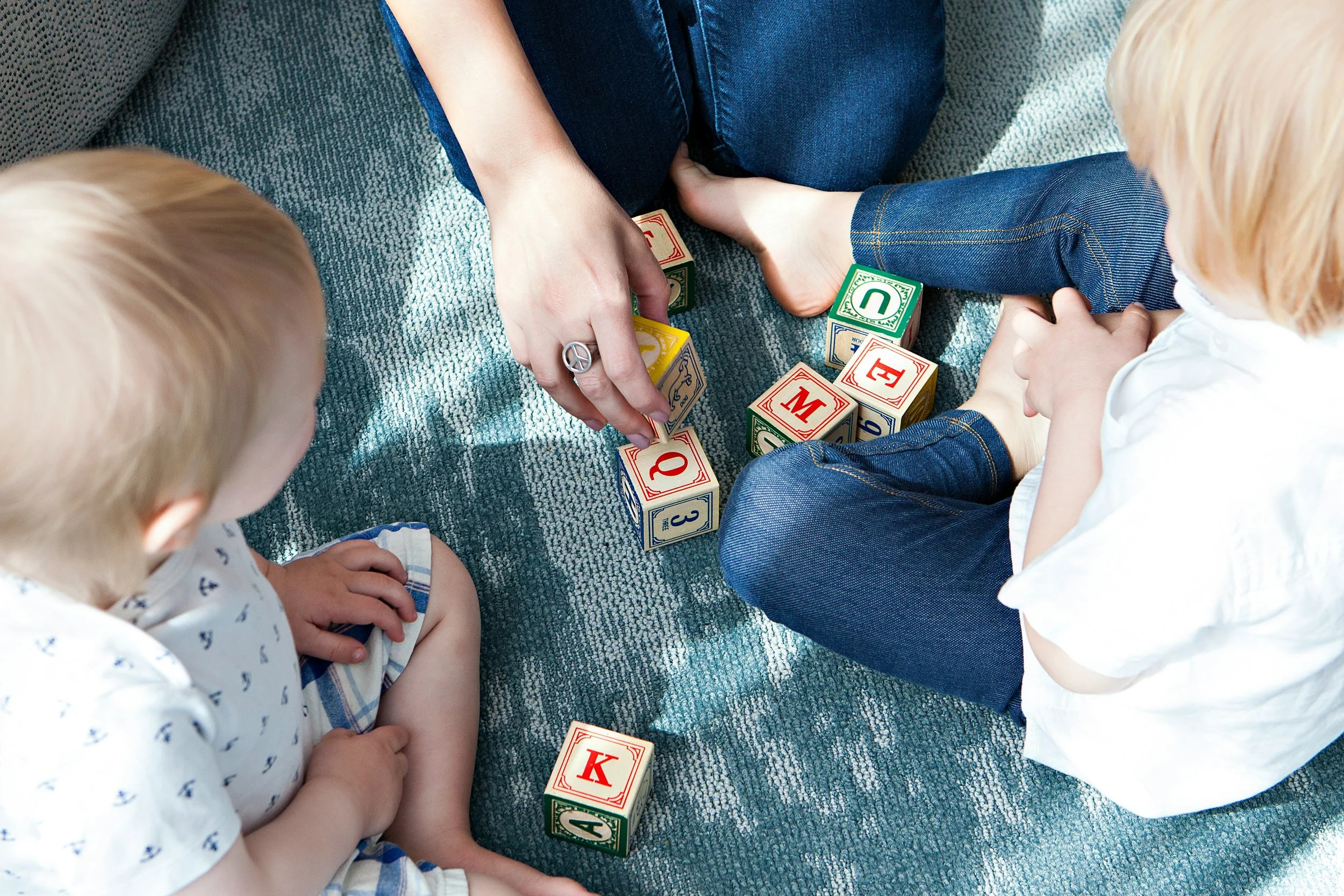
When we think about effective therapy, two ideas can sometimes seem as though they are competing with one another.
On one hand, we want therapy to be evidence-based. We want the strategies and approaches we use as Occupational Therapists and Speech Pathologists to be informed by research and our clinical knowledge.
On the other hand, we want children to enjoy coming to therapy. We want them to feel comfortable with their therapist, have some choice and control, and genuinely want to participate.
So, which is more important?
The answer is both.
Evidence-based therapy is more than following the research
It can be easy to think that "evidence-based therapy" simply means choosing a therapy approach that has research behind it. But evidence-based practice is broader than this.
Evidence-based practice brings together:
the best available research evidence;
the therapist's clinical knowledge, expertise and reasoning; and
the individual child and family's needs, values, preferences and circumstances.[1,2]
In other words, research is incredibly important—but it isn't the only thing informing good clinical decision-making.
This is particularly relevant when working with children.
Two children may be working towards exactly the same goal, but the most effective way of supporting each child to work towards that goal may look completely different.
One child might happily practise their speech sounds using picture cards. Another might be much more engaged when those same sounds are incorporated into a game involving princesses, dinosaurs or their favourite characters.
One child might practise fine motor skills through a structured cutting and drawing activity. Another might develop those same underlying skills while building with LEGO, making something from playdough or creating craft, based around a current interest.
The therapeutic goal hasn't disappeared just because the activity looks fun.
Engagement isn't the opposite of evidence-based practice
When families see an Occupational Therapy or Speech Pathology session involving games, toys, obstacle courses or lots of laughter, it can sometimes be difficult to see where the "therapy" is happening.
But as paediatric therapists, we're often thinking about a different question:
How can we create the conditions in which this child is most able and willing to practise the skill we're targeting?
Research in paediatric therapy increasingly recognises engagement and motivation as important considerations within therapy.[3,4]
Children need opportunities to practise new skills, problem-solve, make mistakes, try again and gradually build their confidence and independence. For that to happen, we first need the child to be willing and able to participate.
Research into motivation in paediatric rehabilitation has suggested that tailoring activities to children's abilities, providing variety, and helping children to see the relevance of activities to their everyday lives may support motivation.[3] However, this doesn't mean every moment of therapy needs to be exciting or entertaining.
Learning new skills can be challenging. Part of therapy can involve supporting children to persist, problem-solve and tolerate the frustration that sometimes comes with learning something new.
But there is an important difference between a child experiencing an appropriate level of challenge and a child being repeatedly pushed through an activity they find distressing or meaningless simply because it is considered therapeutic.
Enjoyment can have a therapeutic purpose
As therapists, we aren't necessarily choosing a game just because it is fun.
We might be choosing it because it creates an opportunity for the child to complete dozens of repetitions of a particular speech sound without feeling as though they're completing a drill.
We might build a child's interest into an activity because it encourages them to persist with a fine motor task they would otherwise avoid.
We might turn something into a competition, imaginative game or silly challenge because we know that particular child becomes more motivated and engaged when we do.
The activity might look different, but the clinical reasoning underneath it remains.
This is where the therapist's expertise becomes important. Evidence-based practice requires clinicians to integrate research evidence with their clinical knowledge and information about the individual child.[1,2]
To demonstrate how all of these factors are coming together, a therapist should still be able to explain:
What they are working on
Why they have chosen this activity or strategy
What skill the child is practising?
How they are adapting the task
And, how will they know whether the strategy is effective
The relationship matters too
Another important part of therapy is something that can be much harder to see or measure: the relationship between the child and their therapist.
Research examining engagement in paediatric rehabilitation has identified strategies such as developing supportive therapeutic relationships, helping children experience success, explaining the purpose of therapy and supporting children's involvement in the intervention process, as effective tools for improved therapy outcomes.[4]
A child who feels safe with their therapist may be more willing to attempt something difficult. A child who knows their therapist will listen when they communicate "no" may feel safer saying "yes" to something new.
And a therapist who genuinely knows a child—their interests, communication style, strengths, preferences and signs that they are becoming overwhelmed—is better positioned to adapt therapy appropriately.
Building that relationship isn't time taken away from therapy. It can be part of what makes effective therapy possible.
So, should therapy always be fun?
Not necessarily.
Our goal isn't to make sure a child is smiling for every minute of every session. There will be times when therapy is challenging.
A child might become frustrated when learning to tie their shoelaces. They might find producing a new speech sound difficult. Writing might require significant effort. Learning a new communication strategy might initially feel unfamiliar.
Effective therapy isn't about removing every challenge. Instead, we want to find the balance between challenge, success, engagement and meaningful practice.
Sometimes that means turning practice into a game.
Sometimes it means incorporating a child's favourite interest.
Sometimes it means giving the child choices about how or where they complete an activity.
Sometimes it means changing an activity completely because what we planned simply isn't working that day.
And sometimes it means gently supporting a child to persist with something difficult because achieving that skill is meaningful to them.
Finding the balance between evidence and engagement
Effective paediatric therapy isn't about choosing between science and fun. Good therapy brings them together.
As Occupational Therapists and Speech Pathologists, we still need to know why we're choosing an activity. Therapy should have clear goals, intentional therapeutic strategies and ways of evaluating whether what we're doing is actually effective. But we can do all of that while listening to the child.
The dinosaur game can still be Speech Pathology.
The obstacle course can still be Occupational Therapy.
The silly voices, favourite characters, LEGO creations and moments of laughter can all sit alongside thoughtful clinical reasoning and evidence-based intervention.
Because ultimately, we don't just want to find an intervention that can work. We want to deliver therapy in a way that gives the individual child the best opportunity to engage, participate, practise and make meaningful progress.
References
American Speech-Language-Hearing Association (ASHA).Evidence-Based Practice (EBP). ASHA describes evidence-based practice as the integration of clinical expertise, internal and external evidence, and client/patient/caregiver perspectives.Bennett, S., & Bennett, J. W. (2000). The process of evidence-based practice in occupational therapy: Informing clinical decisions. Australian Occupational Therapy Journal, 47(4), 171–180.Meyns, P., Roman de Mettelinge, T., van der Spank, J., Coussens, M., & Van Waelvelde, H. (2018). Motivation in pediatric motor rehabilitation: A systematic search of the literature using the self-determination theory as a conceptual framework. Developmental Neurorehabilitation, 21(6), 371–390.van Wietmarschen, M., et al. (2024). Strategies used by professionals in pediatric rehabilitation to engage the child in the intervention process: A scoping review. Physical & Occupational Therapy in Pediatrics.
